Discovering our Roots
Take a journey back to the past and recognize the rich legacy of our ancestors and stunning natural heritage.
Slovenia, History & UNESCO sights in 10 days
Vibrant capital
To arrive in Ljubljana there are several options. Due to its location, it is easily accessible not only from Ljubljana airport but also many airports from neighboring countries. Just choose the best option for you.
Evening is reserved to explore the lively streets of Ljubljana and experience the culinary flavors of the capital. Dinner is organized at a local restaurant. Overnight in Ljubljana.
Plečnik's legacy
The green capital of a green country. The Brimage of the town by a river with picturesque bridges and a marketplace was designed by the famous architect Jože Plečnik. Enjoy a walking city tour of Ljubljana and visit the Ljubljana Castle.
Slovenia is safekeeping the protected world heritage of the prehistoric pile dwellings around the Alps. In the Ljubljana Marshes were discovered 40 locations, piles are included on UNESCO lists. The most important is a 5.200-year-old wooden wheel with an axle.
Alpine pearls
In the alpine city of Bled visit the Castle on a cliff above the lake, enjoy spectacular views of the Alps and the island of Bled. On a traditional boat called pletna visit the island of Lake Bled. Proceed to the beautiful Bohinj region in the Triglav National park.
Take a cable car ride to mountain Vogel. Back at the lakeshore join locals at a Dairy farm for butter making presentation and tasting of their traditional products. Continue to Radovljica, a medieval town with a long tradition of beekeeping, known also as Sweet Radovl’ca. Return to Ljubljana.
Colorful carnival
Maribor, the second largest city, is located between vineyards, river Drava and Pohorje mountains. On the city tour we visit the main attractions, walk by the river, visit Lent and The Old Vine House. Continue to the oldest Slovenian city, Ptuj.
The castle above the town with the oldest wine cellars dominates over the streets with one of the most colourful carnivals in the world and the Kurenti masks, the exceptional character of which has also been recognised by UNESCO. Return to Ljubljana.
Rudolph's raft ride
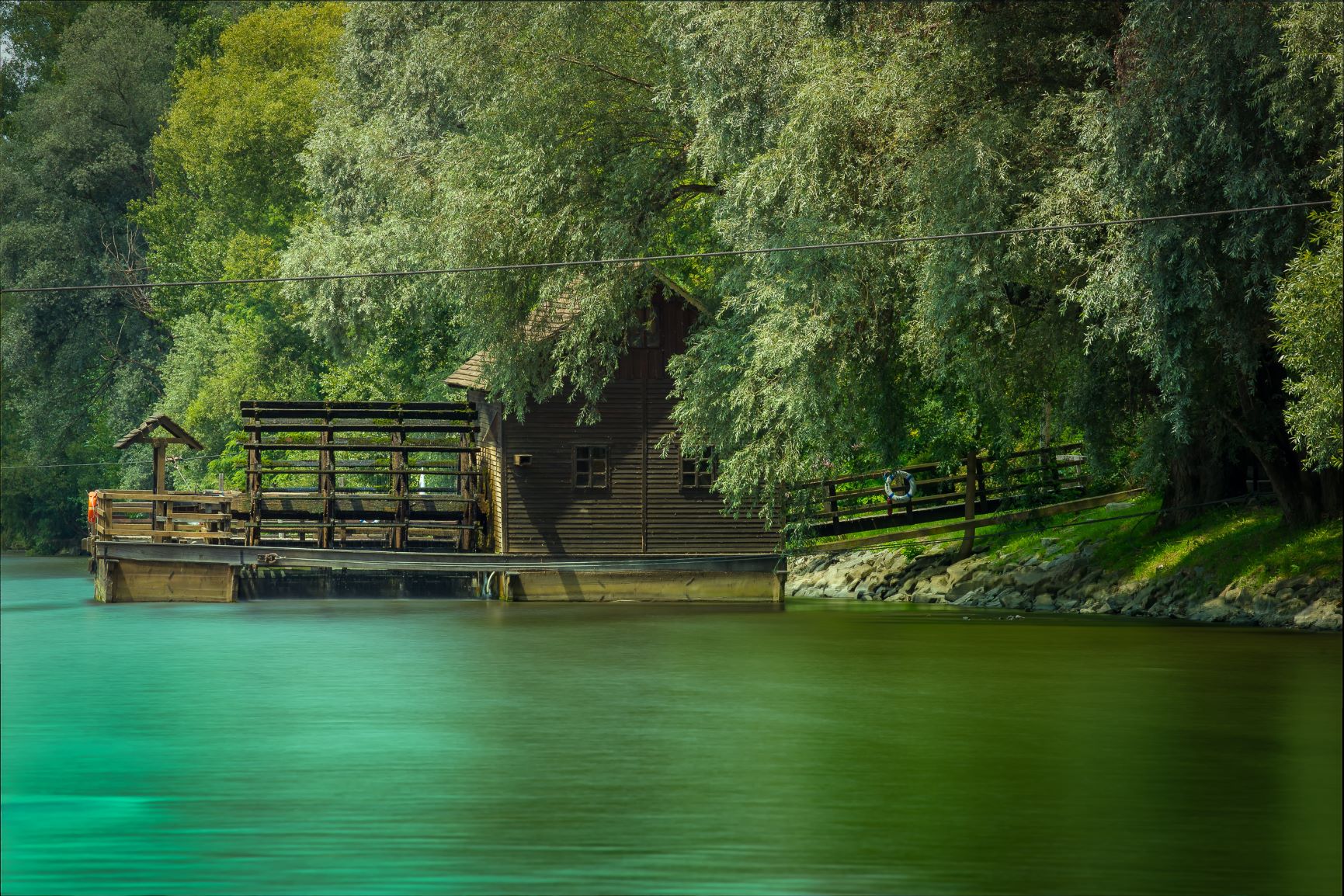
The town of situla has an archaeological heritage of world importance. It is surrounded by wine-growing hills, where the traditional Cviček wine is produced, and the Gorjanci Hills. Take a relaxing ride with Rudolph’s raft and admire Novo mesto from the water.
On your way back to Ljubljana stop at Otočec Castle located on a small island on the River Krka. Overnight in Ljubljana.
Green karst
On the way to the Slovenian coast stop at the Škocjan caves, first sight in Slovenia on the UNESCO list. The surrounding area is a regional park of protected natural and cultural heritage. Continue to Lipica, the cradle of white horses, the oldest European stud farm.
Piran, a picturesque town with the famous Tartini Square and St. George Cathedral known for a bell tower perched on the hill overlooking the town and the sea. Dinner will be organized in a local restaurant on the Slovenian coast.
Romantic Brda
At Sečovlje visit Salina Nature Park where locals harvest salt using a 700-year-old method. Continue to Groriška Brda, region nestled between the Alps and the Mediterranean landscapes. Wander through romantic villages or roam amongst the vineyards,
olive groves and orchards. On to Kobarid and Alpine territory. The blue-green Soca River flows over white gravel through a fairy-tale landscape. Kobarid is known for the Battle of Caporetto, documented by Ernest Hemingway in his novel ‘A Farewell to Arms’.
Soča valley
Go up to the Italian Charnel house and Church of St. Antony, located on a hill above Kobarid town. It houses the bones of over 7.000 Italian soldiers killed here during World War I. Mussolini himself dedicated the church and Charnel house in 1938. Visit the Kobarid
museum. Drive to Bovec, town nestled in the Soča Valley and near the Kanin ridge, the highest ski resort in the country. Continue via the mountain pass of Predil into the Log pod Mangartom, devastated by an avalanche in 2000. Overnight in Kranjska Gora.
Alpine gorge
Kranjska Gora is an attractive mountain and tourist sports center throughout the year, adored by skiers, cyclists who endeavor to conquer the highest Slovenian mountain pass, and hikers. Explore the beautiful Triglav National Park area including taking a walk
through the alpine gorge of Vintgar, with 50 to 100 meters high walls. The pathway passes several natural pools and leads to Šum waterfall. In the afternoon travel to Ljubljana with a stop in Škofja Loka, the best-preserved medieval town in Slovenia.
Bobbin lace
In the oldest Slovenian mining town enter the mysterious depths of Idrija underground. Mercury heritage in Idrija features on the UNESCO World Heritage List. On a tour learn about old mining methods. Idrija is known also for the tradition of original lace making.
Visit the Franja Partisan Hospital, a unique monument from World War II. It operated as an illegal hospital in the Pasica gorge near Cerkno. Franja Hospital is since 2015 a holder of the European Heritage Label. Return to Ljubljana.
Croatia, Historical trails in 9 days
Know the capital
Your journey starts with a walking tour to experience Zagreb’s Upper and Lower Town districts that will give you an insight into the two different cities. The modern, urban and vibrant capital as well as the historic, cultural Zagreb. Continue the tour to Trakošćan castle
with its well-presented museum and attractive grounds. The castle features three floors of exhibits, the rooms range in style from neo-Renaissance to Gothic and baroque. Finally, visit of Varaždin, the former capital town of Croatia. Overnight at the hotel in Zagreb.
Hidden treasure
Explore Istria, its lesser known inland with delightful medieval hilltop villages. Motovun, a small hilltop town above river Mirna. The area is well known among foodies, because the nearby forests are full of hidden treasure: black and white truffles. Enjoy typical Istrian lunch at local restaurant.
Continue to the town of Poreč, visit the Euphrasian Basilica famous for its Byzantine mosaics. In Pula, the largest city in Istria a guided city tour is starting from the amphitheater Arena. Head to the former imperial resort town of Opatija, located on the beautiful Gulf of Kvarner. Overnight.
Cascading lakes
Dedicate this day to discover one of Croatia’s most astounding natural sites: the cascading lakes of the UNESCO World Heritage-listed Plitvice National Park.
Walking trails hug the lakes, allowing us to journey on foot and watch as the water transforms from emerald green to azure blue. Overnight in Plitvice.
Sea Organs
Depart to Paklenica National Park. Its beech tree forest was declared as UNESCO’s world heritage site for “Ancient and primeval beech forests of the Carpathians” in 2017. Continue to Zadar which historic center is one of Croatia’s newest UNESCO World Heritage sites.
Marvel at the Greeting to the Sun and Sea Organs art installations, explore the Roman ruins of Forum Square, sample local foods at the Green Market, and traditional Maraschino liqueur at a café. Overnight in Zadar.
UNESCO heritage
Drive to the seaside city of Šibenik with St James’s Cathedral, the UNESCO World Heritage site. Continue south along the coast to the artists’ town of Trogir. Explore the Old Town and see the Romanesque-Gothic Cathedral of St Lawrence.
Another UNESCO World Cultural Heritage site is on the menu for today. Explore the historic inner city of Split built around the Roman Emperor Diocletian’s Palace. Immerse yourself in Roman history. Overnight in Split.
Island of Sun
Hvar, Queen of the Dalmatian Islands, considered one of the ten most beautiful islands in the world. Main town, Hvar, prospered during the 3.5 centuries of Venetian rule. This picturesque town and marina are alive with the constant hum of activity. A walking tour through narrow streets takes us to
the 15th century Franciscan Monastery, the Renaissance cloister, the old rectory that today houses a collection of lace, manuscripts and books. Visit St Stephen’s Cathedral and the Arsenal, a thick walled fortress overlooking the harbour. Ferry back to Split. Overnight in Split.
Fairytale town
After breakfast head south along the scenic Dalmatian coast to the shimmering pearl of the Adriatic, Dubrovnik. Whether you are visiting Dubrovnik for the first time or the hundredth,
the sense of admiration never fails to descend when you set eyes on the beauty of the old town. Afternoon is free at leisure. Overnight in Dubrovnik.
Ancient treasures
During your Old Dubrovnik walking tour visit the Rector’s Palace which underwent various restorations due to damage by fires, explosions, and earthquakes. Admire the very unique mix of styles that have been blended perfectly across this monumental structure. Our tour will also take us past the Bell Tower Clock and
Orlando’s Column, see the Sponza Palace and the Dominican and Franciscan Monasteries, one of the world’s oldest pharmacies. The afternoon is free for you to enjoy at your leisure. For the farewell dinner enjoy the warm hospitality of the locals and taste the regional cuisine at a special home-hosted dinner. Overnight in Dubrovnik.
Final images
Before departing Dubrovnik summarize your impressions of the whole tour having a coffee on promenade street Stradun or
catching some sun on Copacabana beach. Safe travel back home!
Tour of Habsburg Empire in 10 days
Imperial capital
Vienna’s imperial glory is the legacy of the powerful Habsburg monarchy. Their home for more than six centuries, the Hofburg palace complex, include the Imperial Chapel with the Vienna Boys’ Choir and the famous Spanish Riding School, where Lipizzaner studs perform elegant dance, along with a trove of museums, including in Other great palaces include the baroque Schloss Belvedere and the Habsburgs’ summer residence with all 1441 rooms, Schloss Schönbrunn, while 19th-century splendours such as the neo-Gothic City Hall line the magnificent Ringstrasse encircling the inner city.
Welcome dinner is organized in one of Vienna’s restaurants. Overnight.the chandeliered Imperial Apartments. Other great palaces include the baroque Schloss Belvedere and the Habsburgs’ summer residence with all 1441 rooms, Schloss Schönbrunn, while 19th-century splendours such as the neo-Gothic City Hall line the magnificent Ringstrasse encircling the inner city. Welcome dinner is organized in one of Vienna’s restaurants. Overnight.
All the highlights
On a morning walking tour see the most imposing sights of the city, Maria Theresia square, The Museum of Fine Art, Museum’s quartier, Burgtheater, The Hofburg Palace, Graben, St Stephan’s Cathedral, Kärntner street, Albertina, Hotel Sacher, The Opera house, City hall, Karl’s church, Musikverein, Belvedere, Secession Building.
After some free time at the famous Nachmarket visit the former royal summer residence Schönbrunn Palace with its beautiful gardens. Continue to Hundertwasser house, one of Vienna’s most visited buildings that have become part of Austria’s cultural heritage. The evening is free to enjoy the city on your own.
A day for art
For the art lovers we suggest visiting one of the museums. Fine Art museum, Albertina Gallery, Belvedere, or maybe Secession; if you prefer classical music, visit House of Music or enjoy the guided tour of Opera house. Visit one of the coffee houses, order a melange and enjoy
the silence with a newspaper in your hands and pretend to be one of the locals. For lunch taste& some of Vienna’s culinary specialties. Evening is reserved for classical music. We enjoy the concert of Mozart and Strauss at one of the famous concert halls. Overnight.
Mosaic of history
The capital of Slovakia, Bratislava lies at the foot of Little Carpathians and rivers Danube and Morava. It is a mosaic of illustrious history: a medieval and Gothic old town, baroque palaces, crowning castle, stark-angled, communist-era blocks, and a futurist bridge.
Stroll around the old town and enjoy the coffee or early lunch at one of the lovely restaurants.
Continue to Budapest, the co-capital of
the Austro-Hungarian Empire. The central area of the city along the Danube River is classified as a UNESCO World Heritage Site. On a walking tour visit the Pest side, the commercial hub of the city with the Hungarian Parliament, Opera house, the Andrássy Avenue, Heroes’ Square, and St. Stephen’s Basilica. The evening is free to enjoy the food on one of the amazing street restaurants.
River cruise
Cross the Danube and visit the part of Buda, the old Hungarian capital. The tour takes you up to the Fishermen’s Bastion, where the Matthias Church and the picturesque Castle district are located. Enjoy the magnificent panoramas of the city and Danube River.
After free afternoon, the evening is reserved for a scenic cruise along the romantic Danube River. Dinner will be served during the cruise. Overnight in Budapest.
Scenic journey
This morning depart to Poland through Slovakia. Cross the magnificent mountains Tatras in a beautiful half-day journey through
Zakopane, the highest situated town in Poland. Arrival to Krakow and overnight.
Cultural capital
Kraków is one of the largest cities in Poland, known primarily for its grand historic architecture and cultural leadership. UNESCO designated its old town a World Heritage site in 1978. Its Main Square has existed since the 13th century and a modern landscaped area is laid out on the site of past fortifications. On our morning city tour see the Main Market Square, St. Mary Basilica, the Collegium
Maius, Museum of Pharmacy, Wawel Royal Castle, Wawel Cathedral, Church of SS Peter and Paul, and many more. In the afternoon we suggest visiting the Schindler’s Factory or The Princes Czartoryski Museum where the famous Da Vinci’s work, Lady with an ermine is now housed. Explore the narrow streets of Kazimierz and visit the former Jewish District. Overnight in Krakow.
University town
Early morning departure towards the Czech Republic. First, stop in Brno for a stroll through the old town. Brno is former Moravia’s capital and the second-largest city in the Czech Republic. It is an important center of higher education with 33 faculties belonging to 13 institutes of higher education and thousands of university students which ensure a lively scene to the city life. Continue to Prague.
The capital of the kingdom of Bohemia grew out of a few separate settlements which were amalgamated under Joseph II in 1784. Several Habsburg rulers resided at Prague Castle. After the collapse of the Habsburg Monarchy Prague became the capital of Czechoslovakia and today of the Czech Republic. Arrival in Prague and short orientational tour of the city center before the dinner.
Heritage sights
Drive across the Vltava River and up the hill to the most massive castle complex in continental Europe, Prague Castle. This tour will bring Habsburg history to life. Tour the impressive St. Vitus Cathedral, Old Royal Palace, St. George’s Basilica, and the Golden Lane.
In the afternoon visit the city Jewish Quarter, the Old Jewish Cemetery, and the Spanish Synagogue. Continue to the Old Town Square for the tour which features the general area, The Old Town Square with the baroque church of St. James, Black Madonna House, Estate Theatre, Food Market, Wenceslas square. Dinner in a local restaurant.
Farewell
End the tour exploring on your own this amazing city, full of historical and artistic sights, the best bars, and Czech taverns.
Experience the city’s pleasent atmosphere before your return back home.
Mosaic of world heritage
To learn about the reach history and culture of our lands you can follow one of our programs or we can tailor one focusing on your special interest.
Authenticity
Traveling is about destinations, physical and emotional journey we experience, the culture we embrace and the stories we bring home.